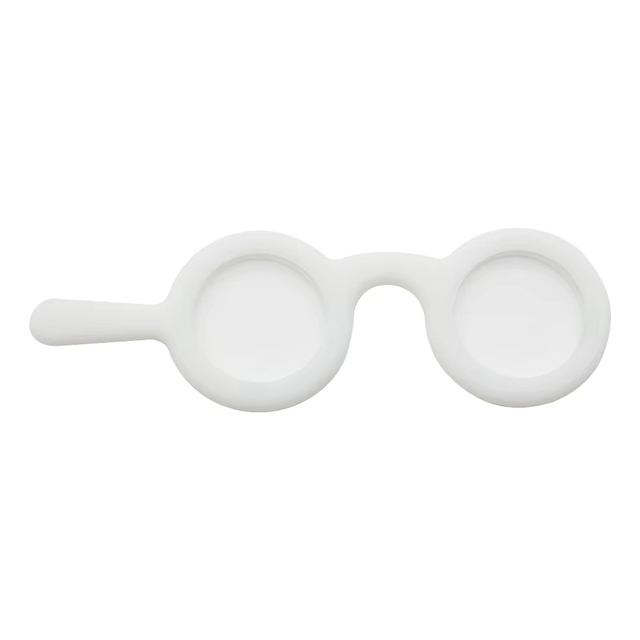
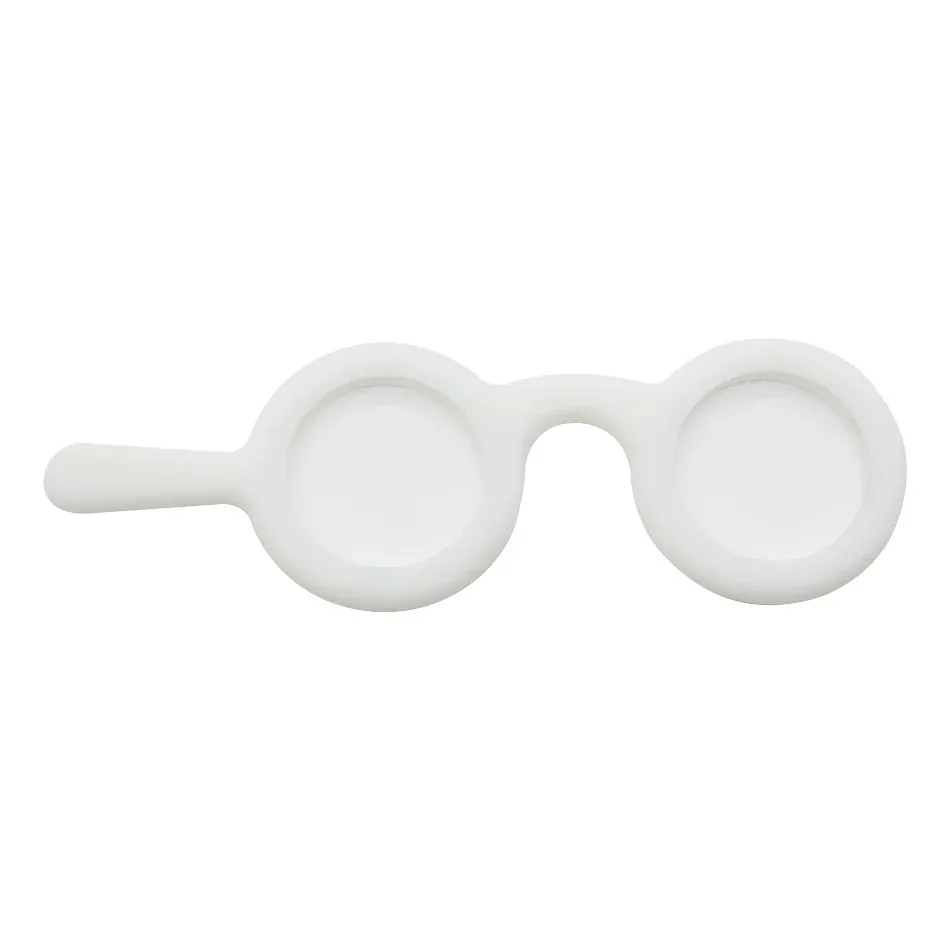
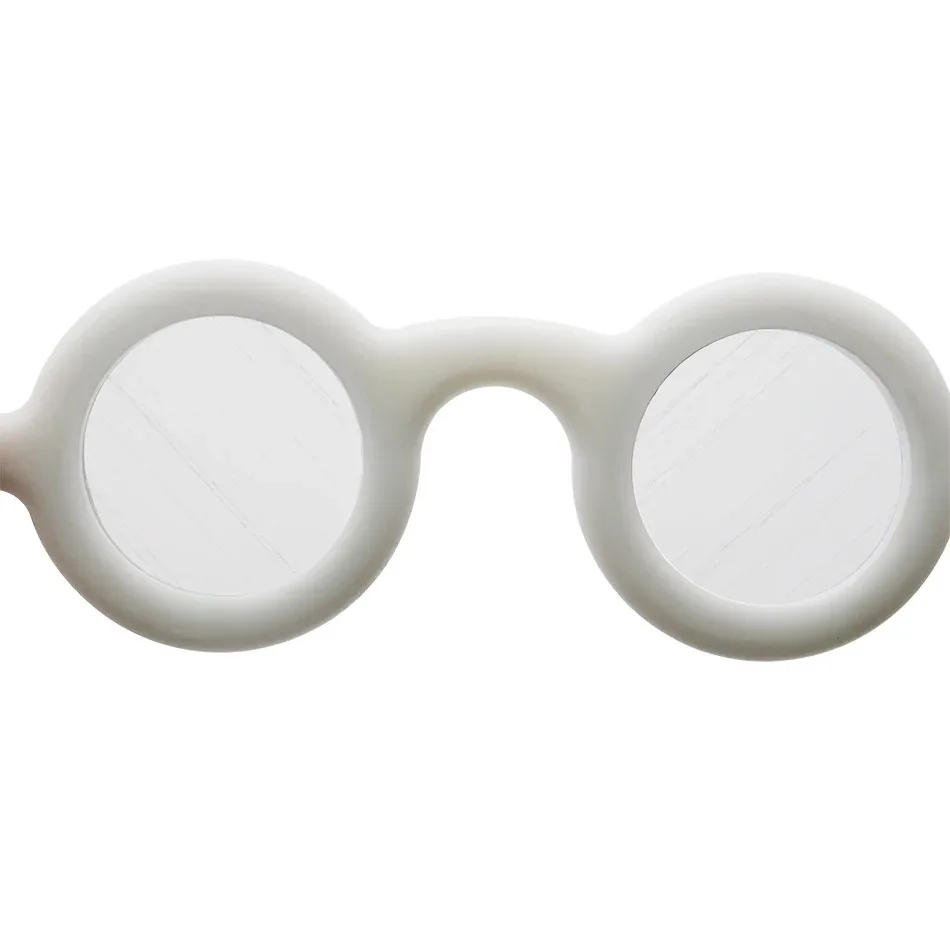
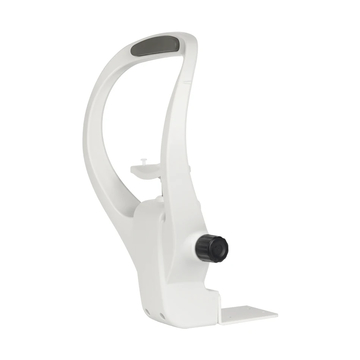
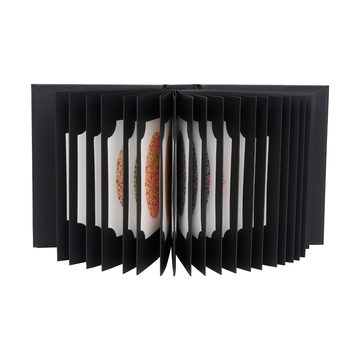
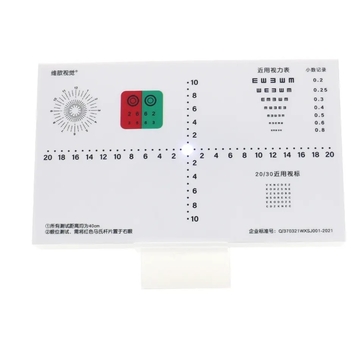
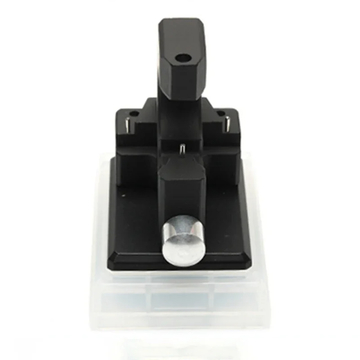
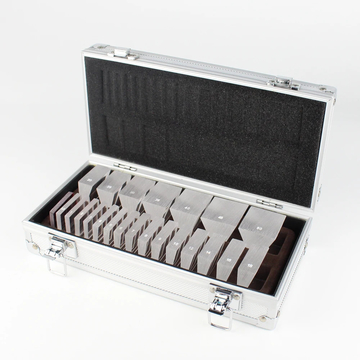
Bagolini Line-Shaped Mirror Product Introduction:
For ophthalmologists to examine the state of binocular vision function, it can quickly determine whether it is normal, or whether
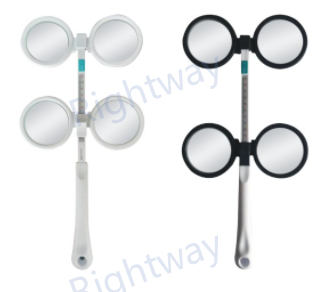
there is retinal correspondence or abnormal correspondence that is inhibited, and the location of inhibition. The examination purpose includes testing for binocular fusion function, normal retinal correspondence and abnormal correspondence, single eye inhibition, dominant eye testing, and nystagmus testing Bagolini Line-Shaped Mirror Examination Method: The line-shaped mirror is etched with many very fine oblique parallel lines. The lines on the two spectacle lenses are perpendicular to each other. If the line direction on the spectacle lens of the right eye is 45 degrees, the line direction on the spectacle lens of the left eye is 135 degrees. When the patient looks through the lens at a light source, they will see a line of light that is vertical to the line-shaped mirror,the right eye sees a 135 degree line of light and the left eye sees a 45 degree line of light. In the condition of bright room or semi-dark room, the examiner places the Bagolini spectacles before the patient's two eyes and asks the patient to look at a point light source 33cm away and 6 meters away. The examiner observes the results seen by the patient and understands their binocular vision function state based on it.
The patient looks through the lens at the point light source, and the bright line seen by them is shown in the following figure:
A. Normal retinal correspondence with no apparent eye position deviation, or harmonious abnormal retinal correspondence
B. Inhibited central retinal field of the right eye, commonly seen in abnormal corresponding internal deviation
C. Massive inhibition of the right eye, commonly seen in abnormal corresponding external deviation
D. Double vision. It is seen in cases of evident internal deviation, indicating normal retinal correspondence
E. Double vision. It is seen in cases of evident external deviation, indicating normal retinal correspondence
F. Double vision. It is seen in cases of vertical deviation, indicating normal retinal correspondence
G. Inhibited central retinal field and surrounding area of the left eye. It is commonly seen in cases where there is evident
deviation within a few months after birth
H. Alternating external deviation, commonly seen in cases of binocular vision balance
I . Uniocular constant external deviation (right eye external deviation, vision is lower)
{{reply_items.text}}By {{reply_items.author}}